Cold spots on radiators are more than just annoying. They are usually a clue that something in your heating system is not working quite right. Understanding the pattern of heat across your radiators can help you decide what you can tackle yourself and when it is time to call a professional.
Reading the symptoms from your radiators
Before you start bleeding radiators or adjusting valves, take a moment to notice exactly what is happening. Different patterns of heat usually point to different causes.
Radiator hot at top, cold at bottom
If the top feels hot but the bottom is noticeably cooler, that often suggests a build-up of sludge or debris inside the radiator. Over time, rust and dirt settle at the bottom and block the flow of hot water.
This is especially common in older systems or where inhibitor has not been used regularly. Bleeding will not fix this pattern, as the issue is in the water and pipework, not trapped air at the top.
Radiator cold at top, warm at bottom
A radiator that is hot at the bottom but cool or cold at the top usually has trapped air. Air rises to the highest point in the system, which is why bleeding radiators is often effective here.
If you have recently drained the system or had work done, pockets of air are even more likely. One or two affected radiators suggest local air; most of the house affected may point to a wider circulation or pressure problem.
Cold at top only: likely trapped air, try bleeding
Cold at bottom only: often sludge build-up, needs cleaning
Cold in middle or patchy: possible sludge or internal restriction
Whole radiator cold: check valves, TRV and boiler settings
One radiator cold versus all radiators lukewarm
If just one radiator stays cold while others work, suspect local issues such as a stuck valve, closed lockshield, or a faulty thermostatic radiator valve (TRV). It can also be due to air trapped in that particular radiator.
If all radiators are lukewarm, you may have a problem with system balancing, the pump, boiler settings, or low system pressure. In this case, bleeding one radiator will not fix the underlying cause.
Safe checks you can do at home
There are several straightforward checks you can carry out without specialist tools. Always make sure the heating is on and has been running for at least 15 to 20 minutes before checking temperatures.
Bleeding radiators (and when it will not help)
Bleeding is useful if the radiator is colder at the top than the bottom. Use a radiator key and a cloth, and turn the bleed valve slowly until you hear air hissing out. When a steady trickle of water appears, close the valve again.
If your radiator is cold at the bottom and hot at the top, bleeding will not solve it. That pattern points to sludge and may need a professional system flush. Also, if you keep needing to bleed radiators frequently, that suggests a bigger issue with air entering the system.
Checking TRV pins and valves
For radiators with a thermostatic radiator valve, unscrew the white plastic head by hand. Underneath, you should see a small metal pin that moves up and down.
If the radiator is stone cold, gently press the pin with your thumb or the end of a spoon. It should move in and spring back out. If it is stuck down, carefully work it up and down a few times. If it will not move freely, the valve insert may need replacing by a heating engineer.
Confirming boiler pressure and controls
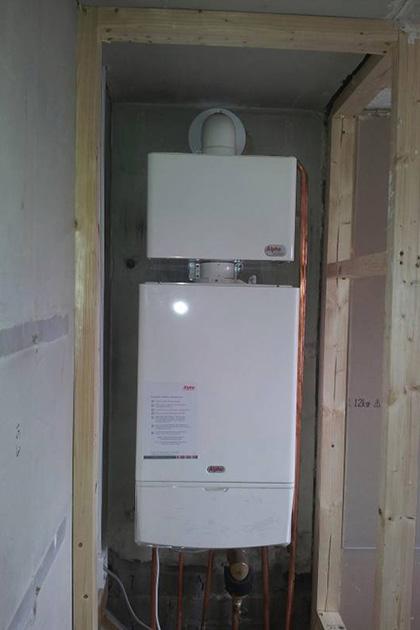
On a combi boiler, look for the pressure gauge, usually on the front. When the system is cold, most boilers should sit around 1 to 1.5 bar. If pressure is very low, follow your boiler manual to top it up once, then monitor it.
On a system or regular boiler with a separate cylinder, check any visible pressure gauges and ensure any filling loops and isolation valves are in the correct positions according to the manual. Low pressure can cause radiators to be lukewarm or stop heating altogether.
It is also worth double-checking your room thermostat and programmer. Make sure the heating is actually called for, time schedules are correct, and that thermostats are not set too low or located in draughty or very warm spots.
When it is more than a quick fix
Some symptoms suggest you should stop DIY checks and call a Gas Safe or qualified heating engineer. Continuing to top up pressure or ignore noises can cause more damage over time.
Clear signs you need a professional
Frequent loss of system pressure and repeated repressurising
Visible leaks from radiators, valves, pipework or the boiler
Loud banging, knocking or gurgling noises in pipes or radiators
Boiler fault codes, lockouts or frequent resetting
Multiple radiators with cold bottoms suggesting heavy sludge
In these cases, a professional can diagnose the underlying cause rather than just treating the symptoms. They can also work safely on gas appliances, which you should never attempt yourself.
Next steps: simple decision guide
If your radiator is cold at the top and warm at the bottom, bleed it once and recheck. If it improves, you have likely removed trapped air. If the issue returns quickly, get a heating engineer to investigate for ongoing air ingress or circulation problems.
If your radiator is hot at the top and cold at the bottom, do not keep bleeding it. This usually points to sludge. Look into getting the system cleaned and dosed with inhibitor, as a DIY chemical flush or a professional power flush, depending on how severe it is.
If one radiator is cold but others are fine, check that both valves are fully open and that the TRV pin is not stuck. If it is still cold, the radiator may need balancing or the valve may have failed.
If all radiators are only lukewarm, check boiler pressure, thermostat settings and that the programmer is calling for heat. If those are all correct, the system likely needs balancing, or there may be a pump or boiler control issue that needs professional attention.
What a heating engineer might do
A qualified engineer can test circulation, check pumps and valves, and identify blockages within the system. They may recommend a system flush or power flush to clear sludge from radiators and pipework, followed by adding inhibitor to help prevent it building up again.
They can also balance your radiators properly, adjusting each lockshield valve so that heat is shared evenly around the home. Where valves or TRVs are faulty, they can replace them and ensure the boiler and controls are set up correctly for your property.
For more focused guides, you can also read posts on how to balance radiators and what to check if a radiator is not heating up. This symptom-led overview should help you decide which detailed guide to follow next.
Need help sorting cold spots on your radiators?
If your radiators still have cold patches after basic checks, or you are unsure what to try next, it is safer to ask an expert. The issue might be simple for a professional to pinpoint, even if it is frustrating for you.
For friendly, reliable help with radiators, boilers and heating problems, contact Ab plumbing and maintenance on 01204888255. We can diagnose the root cause of your cold spots and get your heating running efficiently again.