In the UK, boilers are sized in kilowatts (kW), and the right size depends on two things: how much heat your home loses on a cold day, and how much hot water you use at once. For a combi boiler, hot water usually decides it, and most homes end up with something between about 24kW and 35kW. For a system or regular boiler, which heats a stored cylinder of hot water, the size should match your home's heat loss, which is often lower than people expect.
This post explains what the kW figure means, how an engineer works out the right size, and why bigger isn't better. There's nothing to check inside the boiler itself, but a few simple notes about your home will help you get a better answer from any engineer.
What the kW number on a boiler means
A boiler's kW rating is how much heat it can put out at full power.
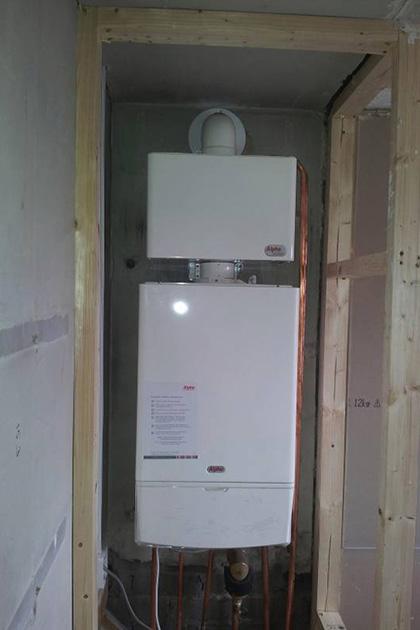
A combi boiler usually has two ratings: one for heating your radiators and one for hot water. The hot water figure is often the bigger one, and it's the number in the name, so a "30kW combi" may send noticeably less than 30kW to the radiators. The manufacturer's specification sheet lists both.
You may see older guides, often American ones, that talk about BTUs (British Thermal Units). One kW is about 3,412 BTUs per hour, but UK manufacturers and engineers use kW, so there's no need to convert anything.
Why a combi boiler is sized for hot water
A combi heats water as it flows through from the mains, rather than storing it in a cylinder. So the question is how many litres of hot water a minute you need, and a bigger combi can heat more water at once. As a rough guide, warming water by about 35°C:
- 24kW: around 10 litres a minute, enough for one shower at a time. Often fine for a flat or a small house with one bathroom.
- 28 to 30kW: around 12 litres a minute. Suits many two and three bedroom homes with one bathroom.
- 35kW: around 14 litres a minute. Suits larger homes with two bathrooms, though two showers at once will still stretch most combis.
There's one catch. A combi can't deliver more water than your mains supply brings in, so a bigger boiler won't fix a weak flow at the taps. If your household often runs two showers at once, a system boiler with a hot water cylinder may suit you better. Our guide to the different types of boiler explains the options.
How system and regular boilers are sized
System and regular boilers store hot water in a cylinder, so they don't need to heat water as fast as a combi. Instead they're sized to your home's heat loss: how much heat escapes through the walls, windows, roof, floor and draughts on a cold winter day.
An engineer works this out with a heat loss calculation, either room by room or for the whole house, then adds a little for reheating the cylinder. The Energy Saving Trust's whole-house sizing method adds a fixed 2kW for hot water and says to pick the nearest boiler size above the result, with nothing else added on top. That's why older advice to add a 10 to 20% "safety margin" is best ignored. It just leads to a boiler that's too big.
Why a bigger boiler isn't better
Going up a size to be safe works against you. When a boiler can put out far more heat than the house needs, it heats the system quickly, switches off, cools, then fires up again. This stop-start running is called short cycling.
Research by the Centre for Research into Energy Demand Solutions found that UK boilers are regularly oversized for heating, especially combis sized for hot water, and that typical oversizing can cost 6 to 9% in efficiency. It also means more wear on parts like the fan and ignition. Modern boilers can turn their output down to match demand, but only so far, so getting the size right still matters.
What changes the size your home needs
The things that make the biggest difference are:
- Insulation and glazing: loft and wall insulation and double glazing all cut heat loss.
- How the house is built: solid walls lose more heat than insulated cavity walls.
- Extensions and loft conversions: more space to heat, and often more glass.
- Radiators: if they're too small for the room, the house won't warm properly whatever the boiler size.
- Bathrooms and showers: how many you have, and how many are used at the same time.
- Your mains water: the flow and pressure coming in, which limits any combi.
If you're planning to add radiators or rework your heating at the same time, our central heating installation service covers the whole system, not just the boiler.
Simple notes you can make before a survey
You can't size a boiler yourself, but a few safe, simple notes help an engineer get it right:
- Count your bathrooms and showers, and note how often two are used at once.
- Note your current boiler's make and model. It's printed on the front or on a label you can see without opening anything.
- Check your mains flow. Run the kitchen cold tap fully into a bucket for 10 seconds, measure the water, and multiply by six for a rough litres-per-minute figure.
- Note what doesn't work well, such as running out of hot water, rooms that never get warm, or a boiler that fires up and stops every few minutes.
- Mention any plans, such as an extension or an extra bathroom.
Never remove the boiler casing or touch the gas pipework. By law, any work on a gas boiler must be done by a Gas Safe registered engineer.
How we work out the right boiler for you
Online calculators give a ballpark figure, but they can't see your house. When we visit, our Gas Safe registered engineers look at your home, your hot water use and your current system, then talk you through whether a combi, system or regular boiler suits you and what size it should be, with a written estimate. As a Baxi Approved Installer, we can also explain which models fit.
If your boiler is due for replacing, AB Plumbing and Maintenance can visit, work out the size your home really needs and talk you through the options. Find out more on our boiler replacement page.